





Diesel Exhaust Fluid Explained: What It Does, How Often You Need It, and What the Warnings Mean
Quick answer: Diesel exhaust fluid is a urea and deionized water solution that converts harmful nitrogen oxides in diesel exhaust into nitrogen and water vapor. It is not a fuel additive and never goes in the fuel tank. Most Ram heavy-duty owners refill every few thousand miles depending on use. Ignoring low-DEF warnings will eventually restrict engine speed by design.
What DEF actually does
Modern diesel engines produce nitrogen oxides — a regulated pollutant. Selective catalytic reduction is the system that deals with them, and diesel exhaust fluid is what makes it work.
DEF is injected into the exhaust stream ahead of a catalyst. Heat breaks it down into ammonia, which reacts with nitrogen oxides across the catalyst and converts them into ordinary nitrogen and water vapor. That is the whole mechanism.
Two things this means in practice. DEF is consumed — it is not a lubricant or a permanent fill. And the system is monitored continuously, because emissions compliance depends on it working.
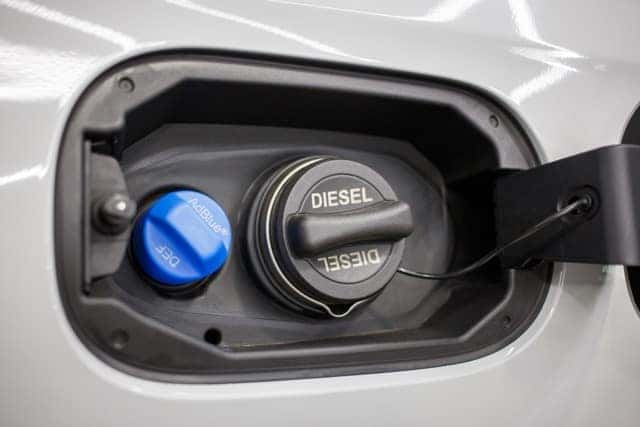
DEF goes in its own separate tank, with a blue filler cap, usually near the fuel filler or under the hood. It never goes in the fuel tank. Putting DEF in the fuel tank is a serious, expensive mistake — if it happens, do not start the engine, and have the vehicle towed.
How often do I need to refill it?
Consumption typically runs at roughly 2 to 3 percent of fuel used, though the figure varies with engine, load and driving.
The practical translation for most owners: a refill every few thousand miles under normal driving, more often when towing heavy or working the truck hard. Heavy load means more fuel burned, more exhaust, and more DEF consumed.
The vehicle tells you well in advance. A gauge or message shows remaining DEF, and warnings begin long before the tank runs dry. There is no reason to be caught out.
What do the DEF warnings mean?
The warning sequence is deliberately staged, and it escalates. Understanding it removes the panic.
| Stage | What you see | What it means |
|---|---|---|
| Early warning | Low DEF message, remaining range displayed | Plenty of time. Refill at your convenience. |
| Persistent warning | More frequent messages, sometimes an audible alert | Refill soon. |
| Final warning | Explicit warning that speed will be limited | Refill before the next start. |
| Speed limitation | Engine speed restricted, often to a low ceiling | By design. Refilling resolves it. |
The speed limitation is not a malfunction and not the vehicle punishing you. It is a federally mandated part of the emissions system — the truck is designed to become impractical to drive rather than to run without emissions control.
The good news: refilling generally resolves it. The system needs to detect an adequate DEF level, which can take a short drive cycle to register.
A separate category of warning relates to a system fault rather than a fluid level — a sensor, heater or injector problem. Those need diagnosis rather than a refill.
Does DEF freeze?
Yes. DEF freezes at about 12°F.
This matters less than people expect, for two reasons. Vehicles with DEF systems have heated tanks and lines designed to thaw the fluid after a cold start, so the system handles freezing conditions as designed. And DEF is not damaged by freezing and thawing — it returns to full effectiveness once liquid.
What to know heading into cooler months:
- Do not add anything to DEF to prevent freezing. Any additive contaminates the fluid and can damage the catalyst.
- Do not overfill the tank. DEF expands when it freezes, and the tank is designed with expansion space.
- Stored jugs of DEF that freeze are fine once thawed. Thaw them naturally rather than applying heat.
Birmingham rarely stays below 12°F, so this is more of a road-trip consideration than a local one — but if the truck heads north in January, it is worth knowing.
DEF quality and storage
DEF has a real shelf life and is sensitive to contamination.
Shelf life is roughly one to two years depending on storage temperature. Heat shortens it considerably, which matters in Alabama. A jug that has sat in a hot shed through a summer may not be good.
Storage should be cool, out of direct sunlight, in a sealed container.
Purity matters enormously. DEF is a precisely specified solution and the catalyst is intolerant of contamination. Never use a funnel that has had fuel or oil in it. Never dilute DEF with water. Never top up with anything other than DEF meeting the correct specification.
Buy the right product. Look for fluid meeting the ISO 22241 standard. A contaminated or off-specification fill can damage the catalyst, and that repair is in a different cost category from a jug of fluid.
Related diesel maintenance
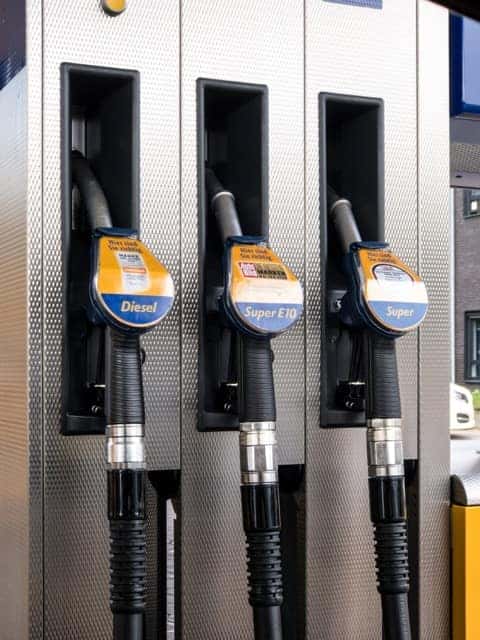
DEF sits alongside a few other items specific to diesel ownership that gas truck owners never think about:
Diesel particulate filter regeneration. The filter captures soot and periodically burns it off at high temperature. That process needs sustained driving. A diesel used exclusively for short trips may not complete regeneration cycles, which eventually causes problems. If your truck does mostly short runs, an occasional longer drive genuinely helps.
Fuel filters. Diesels have them, they are on a service interval, and they matter more than on a gas engine because modern diesel injection systems run at extremely high pressure and are intolerant of contamination.
Oil. Diesel engines hold considerably more oil, and diesel-specific oil is required. Both mean a higher cost per service than a gas truck.
Fuel quality. Buy from busy stations with good turnover. Water and contamination in diesel fuel cause expensive injection system problems.
The Ram Service Center handles DEF, filters and diesel-specific maintenance, and you can schedule service online or order parts directly. If the truck works for a business, the Commercial Vehicle Center covers upfits and fleet service, and you can browse new Ram 2500 inventory if you are shopping.
Frequently asked questions
What is diesel exhaust fluid? A solution of urea and deionized water injected into the exhaust of modern diesel vehicles. Heat converts it to ammonia, which reacts with nitrogen oxides across a catalyst and converts them into nitrogen and water vapor. It is not a fuel additive.
How often do I need to refill DEF? Consumption is roughly 2 to 3 percent of fuel used, which for most owners means a refill every few thousand miles. Heavy towing increases consumption. The vehicle displays remaining level and warns well in advance.
What happens if I run out of diesel exhaust fluid? The vehicle warns repeatedly, then limits engine speed by design as part of federally mandated emissions compliance. It is not a malfunction, and refilling generally resolves it after a short drive cycle.
Does diesel exhaust fluid freeze? It freezes at about 12°F. Vehicles with DEF systems have heated tanks and lines to handle this, and freezing does not damage the fluid. Never add anything to DEF to lower its freezing point.
Can I put DEF in the fuel tank? No. DEF has its own separate tank with a blue cap. Adding DEF to the fuel tank causes serious damage. If it happens, do not start the engine and have the vehicle towed.
0 comment(s) so far on Diesel Exhaust Fluid Explained: What It Does, How Often You Need It, and What the Warnings Mean