





Dodge Durango vs. Jeep Grand Cherokee: How to Choose Between Them
Quick answer: Choose the Dodge Durango if you need three rows as standard, want maximum towing capacity, or want available V8 performance in a family SUV. Choose the Jeep Grand Cherokee if you want genuine off-road capability, a more refined interior, or a plug-in hybrid option. The Grand Cherokee L is the direct three-row answer if you prefer Jeep but need seven seats.
They solve different problems
These two are frequently cross-shopped because they sit at similar prices in the same showroom. They are not the same kind of vehicle.
The Durango is built around towing and seating. Three rows are standard, it is rear-wheel drive based with available all-wheel drive, and it offers V8 power with a tow rating at the top of the segment. It is closer in character to a traditional body-on-frame SUV than most of its unibody competitors.
The Grand Cherokee is built around capability and refinement. It offers genuine off-road hardware, an interior that in higher trims punches above its price, and a plug-in hybrid option that the Durango does not have. The standard version seats five; the Grand Cherokee L is the three-row variant.
Side by side
| Dodge Durango | Jeep Grand Cherokee | |
|---|---|---|
| Rows | Three, standard | Two; three on the Grand Cherokee L |
| Seating | Six or seven | Five; six or seven on the L |
| Max towing | Highest in class, properly equipped | Lower, still capable |
| V8 availability | Yes | Yes |
| Plug-in hybrid | No | Yes, the 4xe |
| Off-road hardware | Available all-wheel drive | Genuine off-road systems available |
| Interior refinement | Sport-oriented | Generally more upscale in higher trims |
| Character | Muscle car with three rows | Capable, refined SUV |
Where the Durango wins
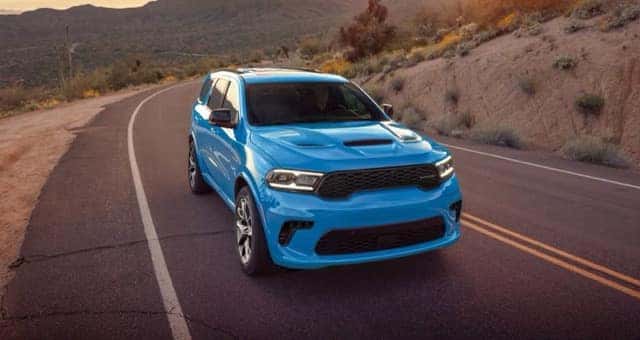
Towing. Properly equipped, the Durango’s tow rating leads the three-row SUV class by a clear margin. If you tow a boat, a camper or a car trailer, this is decisive.
Three rows as standard. Every Durango has them. You do not have to step to a longer variant.
V8 character. The Durango has always been the three-row SUV that behaves like a muscle car. If that appeals, nothing else in the segment does it the same way.
Value in equipment. Durango trims tend to deliver a lot of content for the money.
Where the Grand Cherokee wins
Off-road capability. Available systems including four-wheel-drive hardware and terrain management are genuinely capable, not appearance packages. The Durango is competent in weather; the Grand Cherokee is competent on trails.
Interior refinement. Higher Grand Cherokee trims have materials and design that feel a class above.
Electrification. The 4xe plug-in hybrid is available on the Grand Cherokee and not the Durango.
Efficiency. The Grand Cherokee’s four-cylinder and V6 options are generally kinder to fuel than the Durango’s larger engines.
Size options. If you do not need three rows, the standard Grand Cherokee is a smaller, easier vehicle than a Durango — which is always a three-row-sized SUV whether you use the third row or not.
What about the Grand Cherokee L?
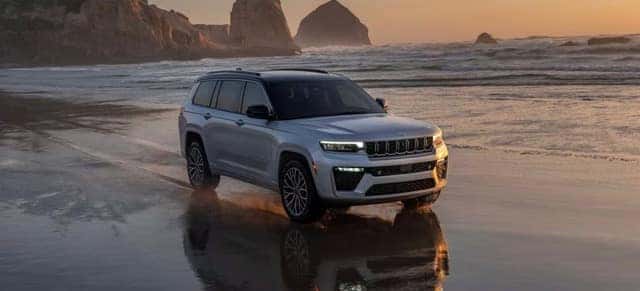
This is where the comparison gets interesting, because the L collapses much of the Durango’s advantage.
The Grand Cherokee L adds a third row and more cargo space behind it, while keeping the Grand Cherokee’s interior and available off-road capability. For a buyer who wants seven seats and Jeep character, it is the obvious answer.
What it does not match is the Durango’s towing ceiling or its V8 character. If those are your priorities, the Durango remains the vehicle.
Three questions that decide it
Do you tow, and how much? If you tow near the limit of a three-row SUV, the Durango. If you tow a light trailer occasionally, either works.
Do you need three rows, and how often? Every day means Durango or Grand Cherokee L. Occasionally means a standard Grand Cherokee plus a plan for the rare trip.
Does your driving leave pavement? Regularly means Grand Cherokee. Rain, the occasional gravel road and Birmingham’s weather means either is fine.
Everyday practicality
A few things that only show up once you live with them.
Parking and size. The Durango is always a three-row-sized vehicle whether the third row is up or not. The standard Grand Cherokee is meaningfully easier in a parking deck or a tight driveway. The Grand Cherokee L sits between them.
Third-row access. In both three-row options, getting into the back row is easier with second-row captain’s chairs than with a bench. If the third row will be used regularly by anyone other than small children, drive both configurations before deciding.
Cargo behind the third row. This is where three-row SUVs separate. With all seats up, both leave limited space — enough for groceries, not enough for seven people’s luggage. If you routinely travel with a full load of passengers and bags, plan on a roof box or a hitch cargo carrier.
Ride quality. The Grand Cherokee is generally the more settled of the two on broken pavement. The Durango’s sportier trims trade some compliance for body control.
Cost of ownership
Both are midsize-to-large SUVs with similar service intervals and many shared components, so maintenance costs are broadly comparable.
The differences show up in fuel and in configuration. A V8 Durango costs meaningfully more to run than a V6 Grand Cherokee. A Grand Cherokee 4xe driven mostly on electricity costs less than either. Insurance varies more by trim and engine than by model — the performance-oriented Durango trims are the most expensive to insure in either family.
Both hold value reasonably well, with the Grand Cherokee generally slightly ahead on retention.
Voyles CDJR of Birmingham stocks the new Dodge Durango, the Jeep Grand Cherokee and the three-row Grand Cherokee L. Our electric vehicle FAQ covers the 4xe if the plug-in is on your list, and the payment calculator will put real numbers against both.
Frequently asked questions
What is the difference between a Dodge Durango and a Jeep Grand Cherokee? The Durango is a three-row SUV built around towing capacity and V8 performance. The Grand Cherokee is a five-seat SUV built around off-road capability and interior refinement, with the Grand Cherokee L as the three-row variant.
Which tows more, the Durango or the Grand Cherokee? The Dodge Durango, properly equipped, has the higher tow rating and leads the three-row SUV class. Both should be checked against the door-jamb sticker on the specific vehicle.
Does the Jeep Grand Cherokee have three rows? The standard Grand Cherokee seats five in two rows. The Grand Cherokee L is the three-row version, seating six or seven depending on second-row configuration.
Which is better off-road, the Durango or the Grand Cherokee? The Grand Cherokee. It offers genuine off-road hardware and terrain management systems. The Durango’s all-wheel drive handles weather and light gravel well but is not designed for trail use.
Is there a hybrid Dodge Durango? No. The plug-in hybrid option in this pairing is the Jeep Grand Cherokee 4xe. The Durango is offered with gas engines only.
0 comment(s) so far on Dodge Durango vs. Jeep Grand Cherokee: How to Choose Between Them