






How Long Does a Car Battery Last? And Why Alabama Is Harder on Them
Quick answer: Most car batteries last three to five years. Heat shortens that more than cold does, so batteries in Alabama often reach the shorter end of the range. Common warning signs are slow cranking, dimming lights at idle, a battery warning light, and electronics behaving strangely. Battery testing is quick and usually free at a service department.
Why heat is worse for a battery than cold
This surprises people, because batteries fail on cold mornings and nobody notices them failing in August.
Both things are true, and they are related. Heat is what does the damage: high temperatures accelerate the chemical reactions inside a battery, evaporate electrolyte and corrode the internal plates. A Birmingham summer degrades a battery’s capacity steadily and invisibly.
Cold is what exposes the damage. Cold thickens engine oil so the starter has to work harder, and it simultaneously reduces the chemical activity that produces current. A battery that lost 40 percent of its capacity over the summer still starts the car in September. In January it does not.
That is why battery failures cluster on the first genuinely cold morning of the year, and why the smart time to test a battery is autumn — before the weather does the testing for you.
What are the warning signs?
Slow cranking. The engine turns over more slowly than usual before starting. This is the clearest early sign.
Headlights dimming at idle. Particularly noticeable at a stoplight, brightening when you accelerate.
Electronics behaving oddly. Infotainment resetting, power windows moving slowly, warning lights appearing and disappearing without pattern.
The battery warning light. This indicates a charging system problem, which may be the battery or may be the alternator. Either way it needs diagnosis.
Needing a jump start. Once is a warning. Twice is a replacement.
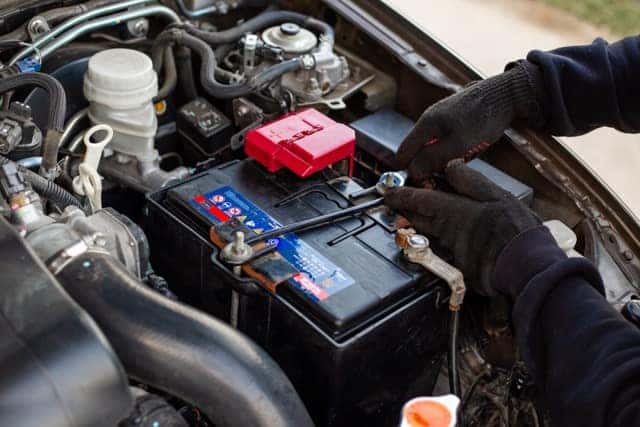
Corrosion at the terminals. White or bluish crusty buildup on the posts restricts current flow. Sometimes it cleans up; sometimes it signals a battery venting gas because it is failing.
A swollen or bulging case. Replace it now. A swollen battery is a heat-damaged battery.
Is it the battery or the alternator?
A useful distinction, because the symptoms overlap.
If the vehicle starts fine after a jump and then runs normally, and the problem is worst after sitting overnight, that points to the battery.
If the vehicle starts after a jump but dies shortly after the jumper cables come off, or the battery light stays on while driving, that points to the alternator not charging.
If a new battery fails within months, suspect the charging system rather than the battery.
Testing settles it in minutes. A proper test measures cranking amps under load and checks charging system output, which is different from simply putting a voltmeter on the terminals.
What shortens battery life
- Heat, which is the dominant factor in this climate
- Short trips. A five-minute drive uses more energy starting the car than the alternator replaces. A vehicle driven only short distances is chronically undercharged, and chronic undercharging kills batteries.
- Long periods sitting. Modern vehicles draw current constantly for security systems, keyless entry and modules that never fully sleep.
- Accessory load. Aftermarket electronics, dashcams and audio systems all add drain.
- Loose or corroded connections, which make the battery work harder than it should.
If your vehicle is mostly used for short trips, an occasional longer drive genuinely helps, and a battery maintainer is worth considering for a vehicle that sits for weeks.
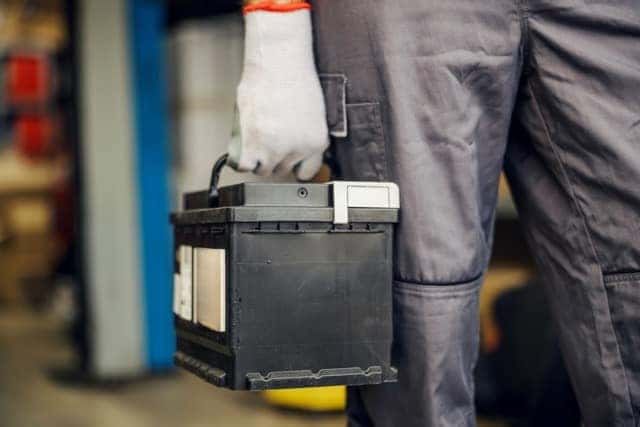
Replacing it is not always a simple swap
On older vehicles, a battery was a battery. On modern ones there are complications worth knowing about before you buy the cheapest option available.
Battery type must match. Vehicles with start-stop systems typically require an absorbent glass mat battery designed for repeated deep cycling. Fitting a conventional battery in place of an AGM will shorten its life dramatically.
The vehicle may need to be told. Many modern charging systems monitor battery age and adjust charging accordingly. If the system is not reset when a new battery is fitted, it continues charging as though the battery were old, which shortens the new one’s life.
Location is not always obvious. Some vehicles place the battery under a seat, in the cargo area or behind a wheel liner. Some have two.
Memory loss. Disconnecting the battery can reset radio presets, clock, seat memory and in some cases adaptive transmission learning.
When to have it tested
Testing is quick, usually free, and worth doing:
- Every autumn, before the first cold snap
- Once the battery passes three years old, at every oil change
- Any time you notice slow cranking
- Before a long road trip
- After any jump start
Voyles CDJR of Birmingham tests batteries as part of the multi-point inspection at routine service, and battery service can be handled through the Express Lane without a lengthy appointment.
You can schedule service online, check current service and parts specials, or visit the Service Center page. Diesel owners should see the Ram Service Center, since heavy-duty trucks run two batteries.
Frequently asked questions
How long does a car battery last? Most last three to five years. In hot climates such as Alabama, the shorter end of that range is more typical, because heat degrades a battery faster than cold does.
Why do car batteries fail in winter if heat is the problem? Heat causes the damage over the summer; cold reveals it. Cold weather thickens oil and reduces the battery’s chemical activity, so a battery weakened over summer finally fails on a cold morning.
How do I know if it’s the battery or the alternator? If the vehicle starts after a jump and runs normally, it is likely the battery. If it dies shortly after the jumper cables are removed, or the battery light stays on while driving, the alternator is the more likely cause.
Do short trips damage a car battery? Yes. A short trip uses more energy starting the engine than the alternator replaces, so a vehicle driven only short distances stays chronically undercharged, which shortens battery life.
Can I replace a car battery myself? Sometimes, but modern vehicles complicate it. Battery type must match the vehicle’s system, the charging system may need to be reset for the new battery, and disconnecting power can reset vehicle settings.
0 comment(s) so far on How Long Does a Car Battery Last? And Why Alabama Is Harder on Them