






Is the Jeep Grand Cherokee Reliable? Longevity, Towing and the Third-Row Question
Quick answer: The Jeep Grand Cherokee has a middle-of-the-pack reliability record that has improved across recent generations. Well-maintained examples routinely reach 150,000 to 200,000 miles. The standard Grand Cherokee seats five; the Grand Cherokee L is the version with a third row. Towing runs to roughly 6,200 pounds with the V6 and higher with the V8, properly equipped.
How reliable is it, honestly?
The Grand Cherokee is one of the most-searched reliability questions in the SUV segment, which tells you something in itself: buyers like the vehicle and want reassurance before they commit.
The fair summary is that it sits in the middle of the midsize SUV field rather than at the top or the bottom. The powertrains are the strong part. The 3.6L Pentastar V6 has been built in enormous volume across the Stellantis range for well over a decade, and the eight-speed automatic behind it is widely used and well understood. Neither is a mystery to a technician.
Most owner complaints cluster in electronics and accessories rather than engines and transmissions — infotainment behavior, sensors, and the occasional electrical fault. Those are irritating, but they are a different category from the kind of failure that ends a vehicle’s life.
Model year matters. As with most vehicles, the first year or two of a new generation carries more early-production issues than the years that follow. If reliability is your primary concern in the used market, a mid-cycle model year is the safer bet than a first-year car.
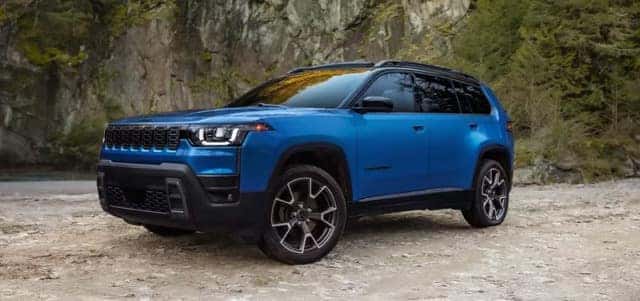 How many miles will a Grand Cherokee last?
With consistent maintenance, 150,000 to 200,000 miles is a reasonable expectation, and plenty of examples run well beyond that.
The variables that decide it are not exotic:
- Oil changes on the specified interval with the correct full synthetic grade
- Transmission service rather than treating the fluid as lifetime fill
- Cooling system attention, which matters more in Alabama heat than in a cooler climate
- Prompt repair of small leaks before they become large ones
- Alignment and tire rotation, which protect suspension components as well as tires
A Grand Cherokee that reaches 200,000 miles almost always has a service record behind it. That is the whole story.
Does the Grand Cherokee have a third row?
This is the single most common point of confusion in the lineup, and the answer is clean:
| Model | Rows | Seating |
|---|---|---|
| Grand Cherokee | Two | Five |
| Grand Cherokee L | Three | Six or seven depending on second-row configuration |
| Grand Cherokee 4xe | Two | Five |
| Wagoneer / Grand Wagoneer | Three | Larger vehicles in a class above |
The Grand Cherokee L is longer than the standard model, and that added length goes into the third row and the cargo area behind it. If you need seven seats, the L is the vehicle. If you do not, the standard Grand Cherokee is easier to park and generally the better choice.
One practical note: the third row in a midsize three-row SUV is best suited to children or short adult trips. If you regularly carry seven adults, look at a full-size vehicle instead.
How much can a Grand Cherokee tow?
Properly equipped, the V6 is rated at roughly 6,200 pounds. V8-equipped versions rate higher. The 4xe plug-in hybrid also tows, though at a figure specific to that configuration.
As with any tow rating, the number applies to a particular build. Trailer weight, tongue weight, hitch class and the vehicle’s own payload all interact, and the door-jamb sticker on the specific vehicle is the authority. For a boat, a small camper or a utility trailer, a properly equipped Grand Cherokee is more than adequate.
Where is the battery in a Jeep Grand Cherokee?
A surprisingly common search, and the answer is not always the obvious one. Depending on generation and configuration, the battery may sit in the engine bay in the conventional position, or it may be located under the front passenger seat or in another out-of-the-way location for weight distribution and packaging reasons. Some models carry a second, auxiliary battery.
Two things worth knowing. First, if you cannot find the battery, that is normal — check the owner’s manual before assuming something is wrong. Second, on vehicles with auxiliary batteries or start-stop systems, battery replacement is not always a simple swap. The system may need to be told a new battery has been installed, and fitting the wrong battery type can cause charging faults.
Grand Cherokee versus the alternatives
Cross-shopping usually comes down to the Ford Explorer, Toyota Highlander, Honda Pilot and Chevrolet Traverse.
The Grand Cherokee’s advantages are real off-road capability that the crossover-based competitors do not have, available V8 power, a plug-in hybrid option, and an interior that in higher trims feels a class above its price. Its disadvantages are third-row space that the L addresses but does not lead the class on, and fuel economy that trails the Japanese competition.
If your list includes genuine trail use, towing and an available V8, the Grand Cherokee is the differentiated option. If your list is entirely about maximum third-row space and fuel economy, some of the competition does that better.
Keeping one healthy in Birmingham
Four things that matter more here than in a cooler market:
Cooling system. Have coolant tested rather than eyeballed, and check hoses for softness. Alabama summers are hard on cooling systems and an overheating event is expensive.
Battery. Heat shortens battery life more than cold does. A battery that made it through winter can still fail in July, and October is the right month to have it tested before the season turns.
Brakes. Stop-and-go driving wears brakes faster than highway miles. Have them inspected at every oil change.
Air filters. Cabin and engine air filters load up quickly in a pollen-heavy region, often faster than the mileage interval assumes.
Voyles CDJR of Birmingham stocks the new Grand Cherokee and the three-row Grand Cherokee L. If the plug-in hybrid interests you, our electric vehicle FAQ covers how the 4xe works day to day. The Jeep Service Center handles maintenance, and you can schedule service online whenever yours is due.
Frequently asked questions
Is the Jeep Grand Cherokee reliable? It has a middle-of-the-pack reliability record that has improved across recent generations. The Pentastar V6 and eight-speed automatic are proven, high-volume components. Most reported issues involve electronics and accessories rather than the powertrain.
How many miles will a Jeep Grand Cherokee last? With consistent maintenance, 150,000 to 200,000 miles is a reasonable expectation, and many examples exceed that. Oil changes, transmission service and cooling system care are the main variables.
Does the Jeep Grand Cherokee have a third row? The standard Grand Cherokee seats five in two rows. The Grand Cherokee L is the three-row version, seating six or seven depending on the second-row configuration.
How much can a Jeep Grand Cherokee tow? Properly equipped, the V6 is rated at roughly 6,200 pounds, with V8 versions rated higher. Check the door-jamb sticker on the specific vehicle, since the rating varies by configuration.
Where is the battery in a Jeep Grand Cherokee? Depending on generation, it may be in the engine bay or in a less obvious location such as under a front seat. Some models have an auxiliary battery as well. Check the owner’s manual, and note that replacement may require the charging system to be reset.
0 comment(s) so far on Is the Jeep Grand Cherokee Reliable? Longevity, Towing and the Third-Row Question