






When to Replace Your Brakes, and What Actually Drives the Cost
Quick answer: Most brake pads last between 30,000 and 70,000 miles, though city driving, towing and hilly terrain shorten that considerably. Replace them when you hear a persistent squeal or grinding, feel a pulsation through the pedal, notice longer stopping distances, or a technician measures the pad material near its minimum thickness. Cost depends mainly on whether rotors need replacing along with the pads.
What are my brakes trying to tell me?
Brakes fail gradually and they announce it. Learning the vocabulary saves money, because catching a worn pad is dramatically cheaper than catching a scored rotor or a damag
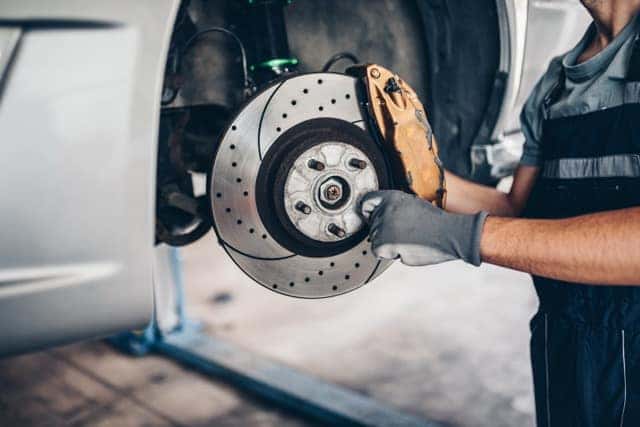
ed caliper.
A high-pitched squeal when braking. Most pads include a wear indicator — a small metal tab that contacts the rotor once the friction material gets thin and makes noise deliberately. That noise is the brakes asking for an appointment, not an emergency.
A grinding or grating sound. This is different and more serious. It usually means the pad material is gone and metal is contacting metal. Continuing to drive damages the rotor and turns a routine job into an expensive one. Get it looked at now.
Pulsation through the pedal or steering wheel. Typically a rotor that is no longer perfectly flat, often from heat cycling. It gets worse, not better.
A soft or spongy pedal. This points to the hydraulic system rather than the pads — air in the lines, a fluid leak, or a failing master cylinder. Treat it as urgent.
The vehicle pulling to one side when braking. Often a sticking caliper or uneven pad wear.
Longer stopping distances. The one people notice last, because it creeps up gradually. If a stop that used to feel routine now feels like it takes planning, have the brakes inspected.
A dashboard brake warning light. Depending on the vehicle this can indicate low fluid, a parking brake left engaged, or an ABS fault. It should never be ignored.
How long should brake pads last?
Between 30,000 and 70,000 miles is the honest range, and the spread is enormous because driving style and conditions dominate.
What shortens pad life:
- Stop-and-go city driving, which is most Birmingham commuting
- Towing or carrying heavy loads
- Hilly terrain, where brakes do more work descending
- Aggressive driving with hard, late braking
- Riding the brake pedal on long descents
What extends it:
- Steady highway driving with few stops
- Anticipating traffic and coasting to slow rather than braking hard
- Keeping the vehicle at or below its rated load
Rear pads and front pads wear at different rates — the front brakes do most of the work on most vehicles, so front pads typically go first.
What actually drives the cost of a brake job?
This is where most published figures mislead people, because “brake pad replacement cost” describes several different jobs.
| Scope | What is involved |
|---|---|
| Pads only | Friction material replaced; rotors measured and found serviceable |
| Pads and rotors | Rotors replaced because they are below minimum thickness, scored or warped |
| Pads, rotors and calipers | A caliper has seized or is leaking and must be replaced |
| Front only or rear only | Front and rear wear at different rates and are frequently done separately |
| Plus brake fluid service | Fluid absorbs moisture over time and is replaced on its own interval |
Vehicle type matters as well. A heavy-duty truck has larger, more expensive brake components than a compact sedan, and performance vehicles with oversized rotors cost more again.
The single biggest cost variable is whether the rotors can be reused. That is decided by measurement, not opinion — every rotor has a minimum thickness specification stamped on it. This is also why catching a worn pad early saves real money: the pad is the cheap part.
Should I have brakes done at a dealership?
For most routine brake work, independent shops do it well. Three situations point toward a dealership service center:
- Warranty or recall coverage. If any part of the brake system is covered, only a franchised dealer can perform the repair at no charge.
- Electronic parking brakes and driver assistance systems. Modern vehicles often require a scan tool to retract an electronic parking brake caliper for service, and some systems need recalibration afterward.
- Heavy-duty and towing applications. Trucks that tow regularly stress brakes differently, and a technician who works on them daily knows where to look.
Mopar friction material is specified for the vehicle it goes on, which matters more than it sounds. Pad compound affects stopping distance, noise, dust and rotor wear, and a cheap pad that stops adequately when cold may fade badly when hot — exactly when it matters.
What to ask at your brake service
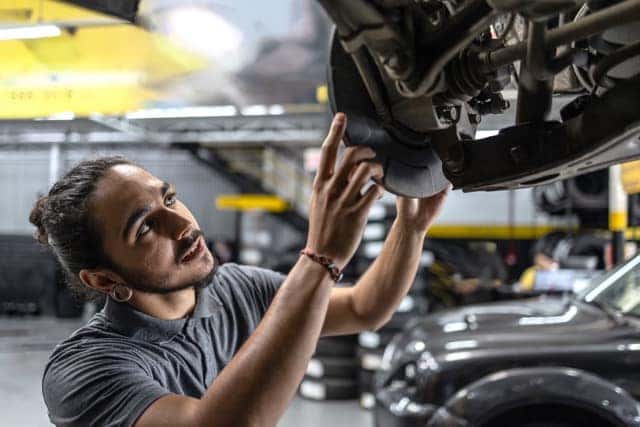
Ask for the actual measurements. A good service department will tell you the remaining pad thickness in millimeters and the rotor thickness against specification, not just “your brakes are getting low.” Numbers let you decide whether to act now or plan for it in two months.
Also ask when the brake fluid was last serviced. Brake fluid absorbs moisture from the air over time, and moisture lowers its boiling point. Fluid that boils under hard use produces a soft pedal at the worst possible moment. It is an inexpensive service that gets forgotten because nothing visibly wears out.
Our Service Center measures pads and rotors as part of every inspection. You can schedule service online, check current service and parts specials, see how our pricing stacks up on the compare and save page, or use the Express Lane for a quick look.
Frequently asked questions
How long do brake pads last? Typically 30,000 to 70,000 miles. City driving, towing, hilly terrain and aggressive braking shorten that considerably; steady highway driving extends it. Front pads usually wear out before rear pads.
What are the signs I need new brakes? A persistent high-pitched squeal, grinding noises, pulsation through the pedal, a soft or spongy pedal, pulling to one side when braking, longer stopping distances, or a dashboard brake warning light.
Why is brake pad replacement cost so variable? Because the job varies. Pads alone cost far less than pads plus rotors, and a seized caliper adds more again. Whether the rotors can be reused is decided by measuring them against a minimum thickness specification.
Is grinding when braking dangerous? It should be treated as urgent. Grinding usually means the friction material is gone and metal is contacting metal, which damages the rotor and reduces braking performance. Have it inspected right away.
How often should brake fluid be changed? Most manufacturers specify a fluid service interval regardless of mileage, because brake fluid absorbs moisture over time. Check your owner’s manual and ask your service advisor when it was last done.
0 comment(s) so far on When to Replace Your Brakes, and What Actually Drives the Cost